Tiles and tiling for UK homes
Slip Ratings for Floor Tiles Explained
7 November 2026
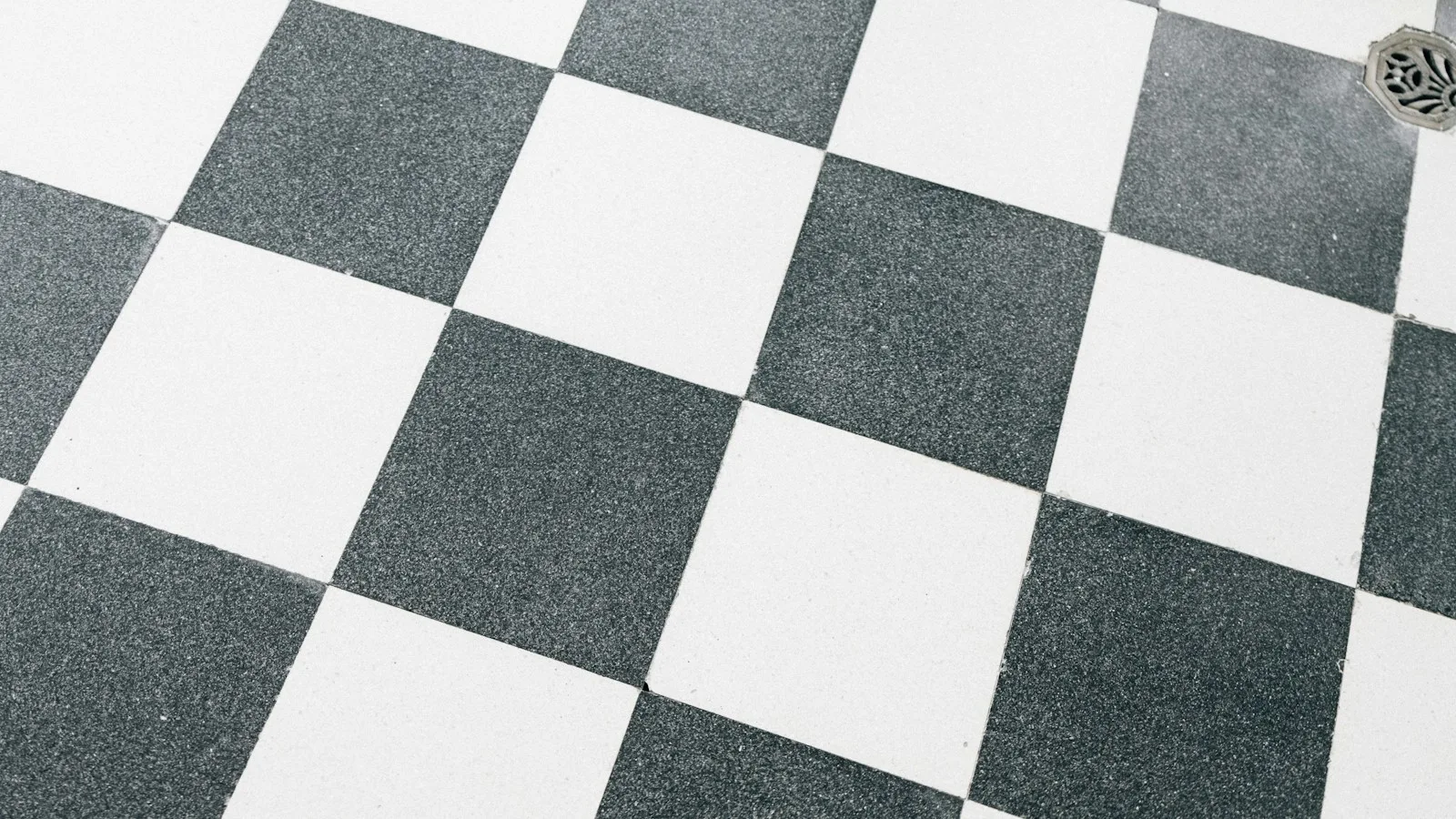
Slip ratings for floor tiles tell you how slippery a floor is likely to be, especially when it's wet. In the UK, the Health and Safety Executive (HSE) uses the pendulum test, which gives a pendulum test value (PTV): 36 or more means low slip potential. Many tiles are sold with an R rating from R9 to R13 instead, and HSE warns that R9, and in some cases R10, floors will be slippery when wet.
Quick answer: Ask for the wet pendulum test value (PTV). HSE classes a PTV of 36 or more as low slip potential, 25 to 35 as moderate and 24 or below as high. R ratings (R9 to R13) come from a German ramp test with oil and safety boots, and HSE has reservations about using them on their own.
Key Takeaways
The pendulum test value (PTV) is the measure HSE uses: 36 or more is low slip potential.
R ratings run from R9 (slippery when wet) to R13 (least slippery).
A, B and C ratings come from a barefoot ramp test. A, and often B, floors are slippery when wet.
Water, soap, grease and the way a floor is cleaned all change how slippery it is.
A tile's slip rating matters most where floors get wet: bathrooms, kitchens, hallways and wet rooms.
The pendulum test (PTV)
The pendulum test swings a rubber slider across the floor and measures the resistance. It is set out in BS 7976, and HSE regards it as reliable and accurate. The result is a pendulum test value.
PTV | Slip potential |
|---|---|
36 or more | Low |
25 to 35 | Moderate |
24 or below | High |
HSE uses a slider called Slider 96 for people in shoes and Slider 55 for barefoot areas. For a bathroom or wet room, where people walk barefoot, ask whether the PTV was measured with Slider 55.
These figures are from HSE's information sheet, Assessing the slip resistance of flooring. Ask the tile seller for the wet PTV, because a dry figure tells you little about a bathroom floor.
R ratings (R9 to R13)
Many tiles, especially those made in Europe, carry an R rating. It comes from a German ramp test, DIN 51130, where a person in cleated safety boots walks on an oiled sample as the ramp is tilted. The rating depends on the angle at which they slip.
Rating | Slip angle |
|---|---|
R9 | 6 to 10 degrees |
R10 | 10 to 19 degrees |
R11 | 19 to 27 degrees |
R12 | 27 to 35 degrees |
R13 | Over 35 degrees |
HSE has reservations about this test, because oil and safety boots aren't what most floors see. It also notes that each band is wide: R10 covers a coefficient of friction from 0.18 to 0.34, a very wide range of slip potential.
Barefoot ratings (A, B and C)
Some tiles also carry an A, B or C rating from a second German ramp test, DIN 51097, done barefoot with soapy water. A covers slip angles of 12 to 17 degrees, B 18 to 23 degrees and C over 24 degrees. HSE says A, and in many cases B, floors will be slippery when wet.
What else makes a floor slippery
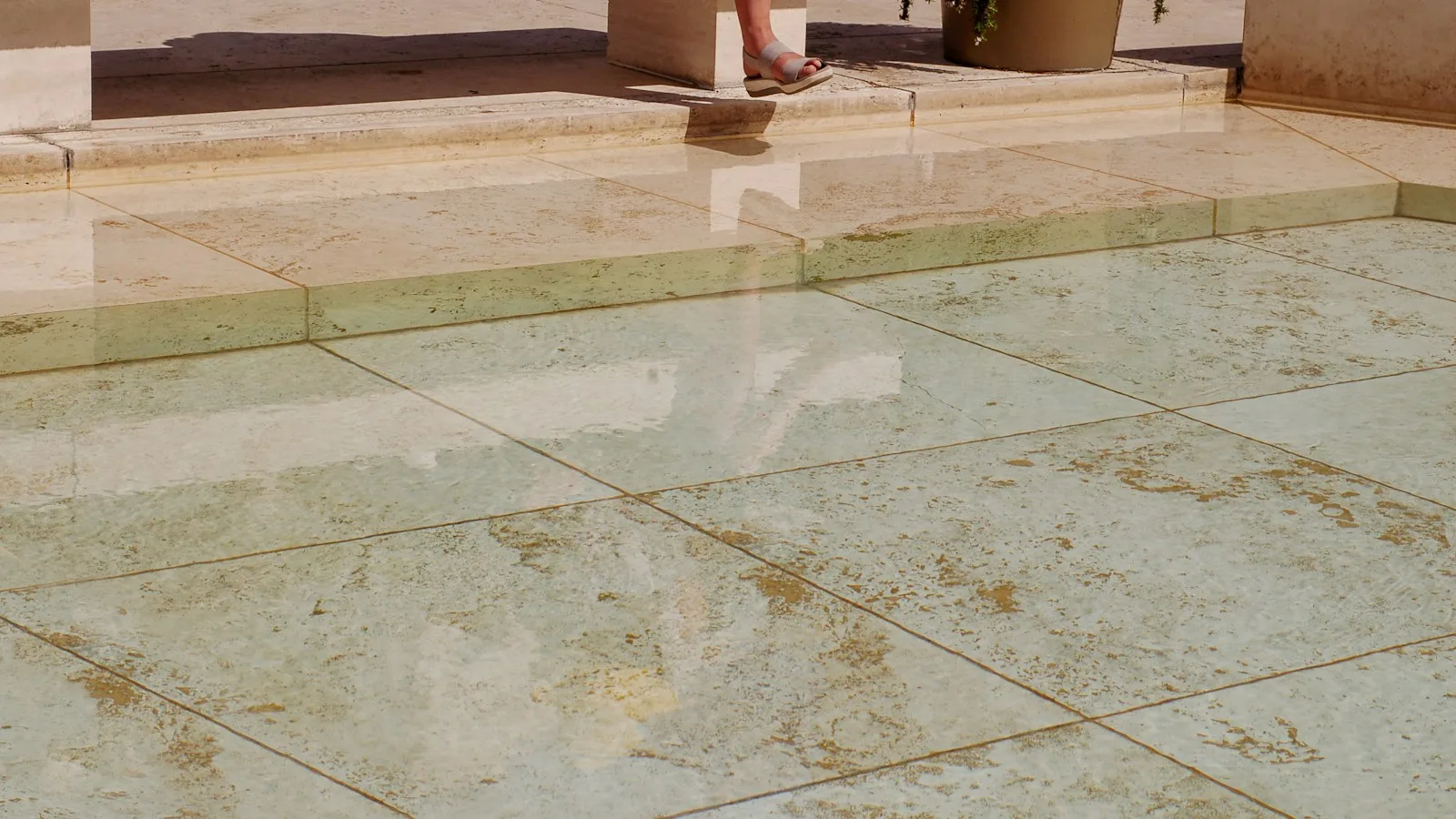
HSE's research shows that the floor is only one part of the picture. Contamination such as water, soap or grease, the way the floor is cleaned, footwear and the way people use the room all play a part. A polished finish can look great and still be slippery when wet, and that includes polished natural stone. Our guide on how to seal natural stone tiles covers caring for stone floors.
HSE also uses surface roughness as a guide in wet conditions. A roughness (Rz) below 10 microns suggests high slip potential, 10 to 20 moderate, and over 20 low. That's mostly a tool for testers, but it explains why textured and matt tiles tend to grip better when wet.
Choosing tiles for a wet floor at home
Ask for the wet PTV, and for a barefoot area ask for the Slider 55 figure.
Treat an R9 or R10 rating with caution where the floor will get wet.
Look at the finish. Matt and textured surfaces usually grip better than polished ones.
Think about cleaning. HSE notes that cleaning, polishing, the wrong maintenance and wear can all change how slippery a floor is.
Porcelain is a popular choice for wet floors because it absorbs so little water, but the finish still decides how slippery it is. Our guide to porcelain or ceramic tiles explains the difference.
Our guide to tile standards covers the other codes on the box.
Grout matters on a wet floor too. Our guide to choosing grout explains which classes suit showers and busy floors.
What slip rating do I need for a bathroom floor?
HSE classes a pendulum test value (PTV) of 36 or more as low slip potential. For a bathroom, ask for the wet PTV measured with the barefoot slider (Slider 55).
Is R10 good enough for a bathroom?
HSE warns that R9, and in some cases R10, floors will be slippery when wet, and that each R band covers a wide range. Ask for the wet PTV rather than relying on the R rating alone.
What does PTV stand for?
PTV stands for pendulum test value. It comes from the pendulum test in BS 7976, which HSE uses to assess how slippery a floor is.
Are porcelain tiles slippery?
It depends largely on the finish. Polished porcelain can be slippery when wet, while matt and textured porcelain usually grips better. Check the slip rating for the exact tile.